Class Project
Posted: Mar 19th, 2011, 2:57 pm
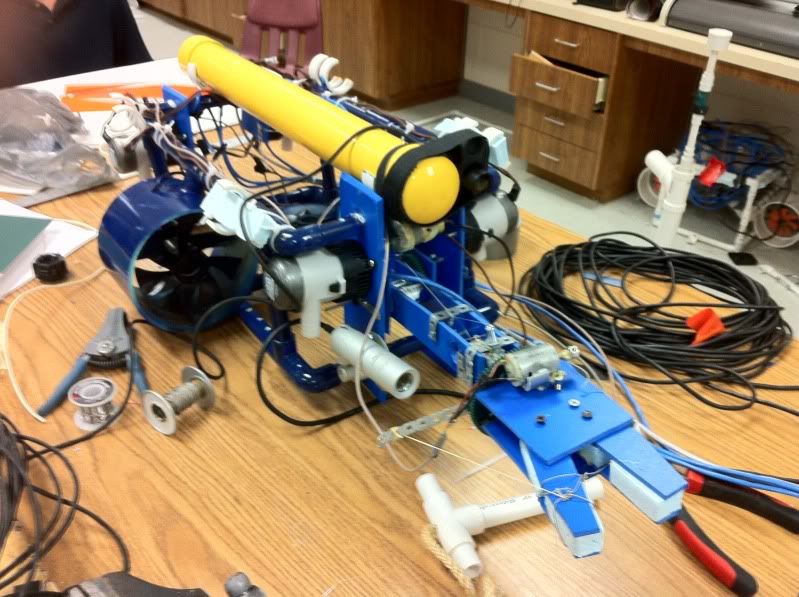
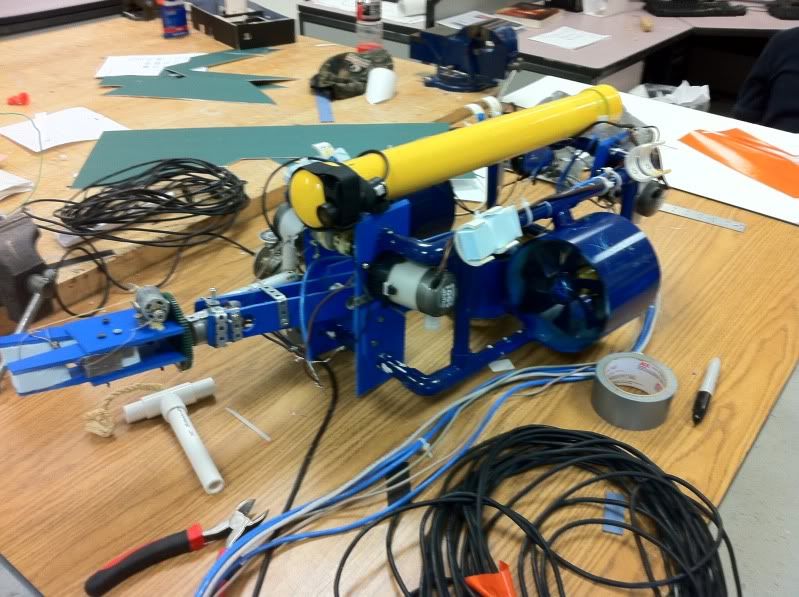
As part of the second year Engineering course in my high school, we were required to build a PVC ROV with neutral buoyancy, easy controllability, and the the ability to do various tasks. My group went with a pretty conventional design with three motors providing up/down, left and right thrust. We have recently finished building the body and the propulsion aspect of the ROV and have yet to start on components needed to complete the tasks.
So far, this is what it look like. Anyways, any questions, comments... are welcome!
There are two cameras attached to allow us to control the ROV from monitors inside a room.
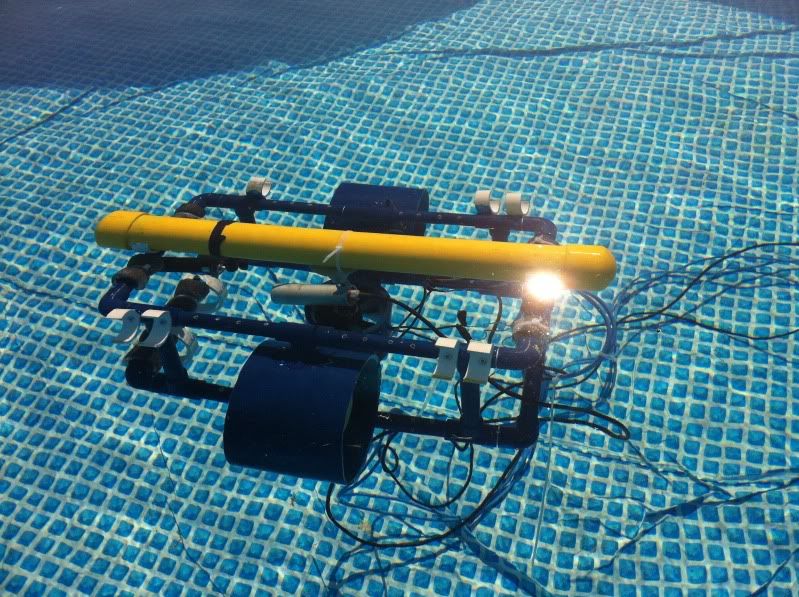
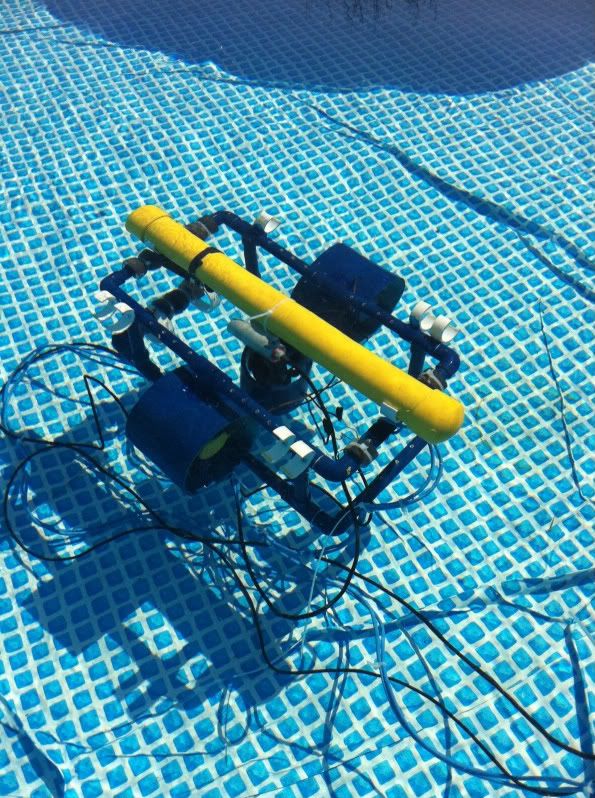
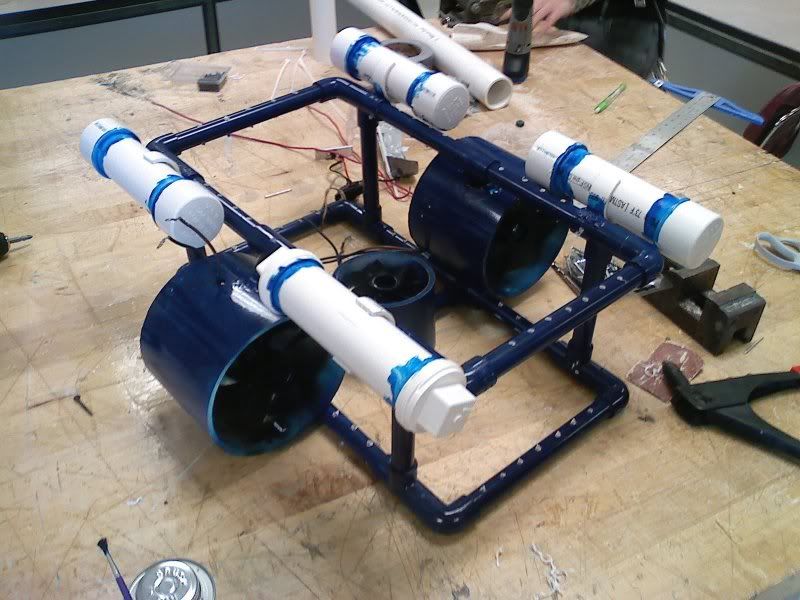
Propulsion supplied by modified bilge pumps with 140mm PC cooling fans attached. We have managed to get a little more than half of pound of thrust on each of the foward/reverse thrust motors. The center motor has a 80mm fan and can produce about a third of a pound of thrust up and down. The thrust is sufficient for the ROV since it is a pretty lightweight design.

So far, this is what it look like. Anyways, any questions, comments... are welcome!
There are two cameras attached to allow us to control the ROV from monitors inside a room.
Propulsion supplied by modified bilge pumps with 140mm PC cooling fans attached. We have managed to get a little more than half of pound of thrust on each of the foward/reverse thrust motors. The center motor has a 80mm fan and can produce about a third of a pound of thrust up and down. The thrust is sufficient for the ROV since it is a pretty lightweight design.